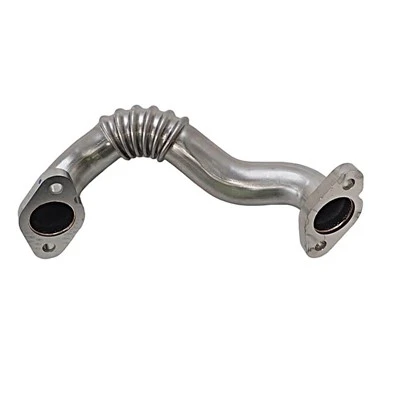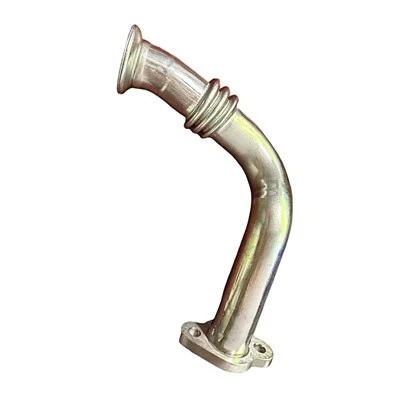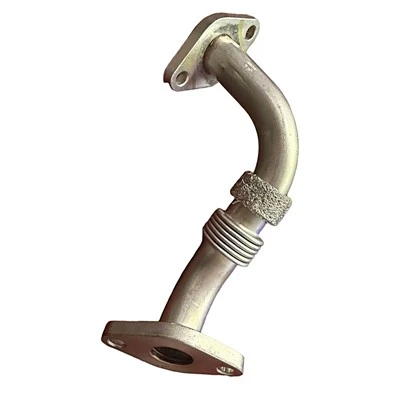


In busy urban life, cars have become an indispensable means of transportation for our daily travels. However, when enjoying the convenience and comfort brought by cars, have you ever paid attention to those car parts that work silently? Today, let's talk about an often overlooked but crucial component – the car exhaust pipe. It is not only an important part of the automobile exhaust system, but also undertakes the important tasks of emitting exhaust gas, reducing noise and shock absorption. But you know what? Car exhaust pipes also have a service life, and their health is directly related to the performance and safety of the car.
Car exhaust pipes play a vital role. It is not only a bridge connecting the engine and the rear, but also the "guardian" of the car's exhaust system. Its main function is to discharge the exhaust gas generated after engine combustion out of the car to prevent harmful substances from accumulating in the car and causing harm to drivers and passengers. At the same time, the exhaust pipe also has the function of noise reduction and shock absorption, which can reduce the noise and vibration when exhaust gas is discharged, and extend the service life of the exhaust muffler system.
The service life of a car exhaust pipe is not a general rule, but is affected by a variety of factors. These factors include, but are not limited to, the vehicle's usage environment, driving habits and maintenance status. The operating environment of the vehicle has a decisive impact on the life of the exhaust pipe. Under harsh driving conditions, such as dusty country roads or salt-spray-corroded seaside, the exhaust pipe is more susceptible to corrosion from external substances, accelerating its aging process. Impurities such as dust, sand, and salt in these environments will continue to corrode the surface of the exhaust pipe, causing problems such as rust and perforation. On the contrary, when driving on clean, dry urban roads, the life of the exhaust pipe will naturally be relatively prolonged.
Driving habits also have a non-negligible impact on the life of the exhaust pipe. Frequent rapid acceleration and braking will not only increase the load on the engine, but also subject the exhaust pipe to greater thermal and mechanical stress, thereby shortening its service life. During sudden acceleration and braking, the exhaust gas flow and pressure in the exhaust pipe will change drastically, leading to increased wear on the inner wall and connections of the exhaust pipe. Driving smoothly and shifting gears appropriately will help protect the exhaust pipe and extend its service life.
The maintenance status of the vehicle is also an important factor in determining the life of the exhaust pipe. Regular maintenance measures such as changing the engine oil, cleaning the air filter, checking and cleaning the carbon deposits in the exhaust pipe can effectively reduce the wear and corrosion of the exhaust pipe and maintain its good working condition. If these maintenance measures are ignored, a large amount of carbon deposits and impurities will accumulate on the inner wall of the exhaust pipe, resulting in poor exhaust and increased temperature, which will accelerate the aging process of the exhaust pipe.
Although the service life of a car exhaust pipe is affected by multiple factors, it is not without trace. When there is air leakage, abnormal noise or abnormal color in the exhaust pipe, it is often an early warning signal that its life is about to end. At this time, drivers should attach great importance to it and conduct timely inspections and repairs to prevent the problem from expanding and affecting the overall performance and safety of the vehicle.
When air leakage occurs in the exhaust pipe, it is often accompanied by problems such as reduced engine power and increased fuel consumption. This is because air leakage will cause the back pressure of the exhaust system to decrease, affecting the intake efficiency and combustion efficiency of the engine. At this time, the driver should check whether the connection of the exhaust pipe is loose or damaged, and replace the damaged parts in time.
Abnormal noises from the car's exhaust pipe may be an early warning signal of failure of the three-way catalytic converter. As an important component in the exhaust system, the three-way catalytic converter is responsible for purifying harmful substances in the exhaust gas. When it fails, it will not be able to effectively purify the exhaust gas, and may cause abnormal noise due to blockage and squeezing of the exhaust gas. At this time, the driver should send the vehicle to a professional repair station for inspection and repair as soon as possible.
Abnormal color of the exhaust pipe is also one of the early warning signs that its life is about to end. When a large amount of carbon deposits or corrosion marks appear on the inner wall of the exhaust pipe, its color will change. Carbon deposits often appear black or dark gray, while corrosion can cause rust or spots to appear on the surface of your exhaust pipe. At this time, the driver should clean the carbon deposits and impurities in the exhaust pipe as soon as possible, check the corrosion of the exhaust pipe, and replace it if necessary.
As an important part of the exhaust system, the health of the automobile exhaust pipe is directly related to the performance and safety of the car. By having an in-depth understanding of the service life of the exhaust pipe and its influencing factors, we can not only detect and respond to potential failures in time, but also contribute to environmental protection, energy conservation and emission reduction while enjoying convenient travel.